A hotel bathrobe is a garment as well as a textile. Fabric weight matters, but guest fit, movement, belt position and laundry behaviour can decide whether the robe works in service. Approve the complete garment rather than selecting from a fabric photograph alone.
Start with the guest experience
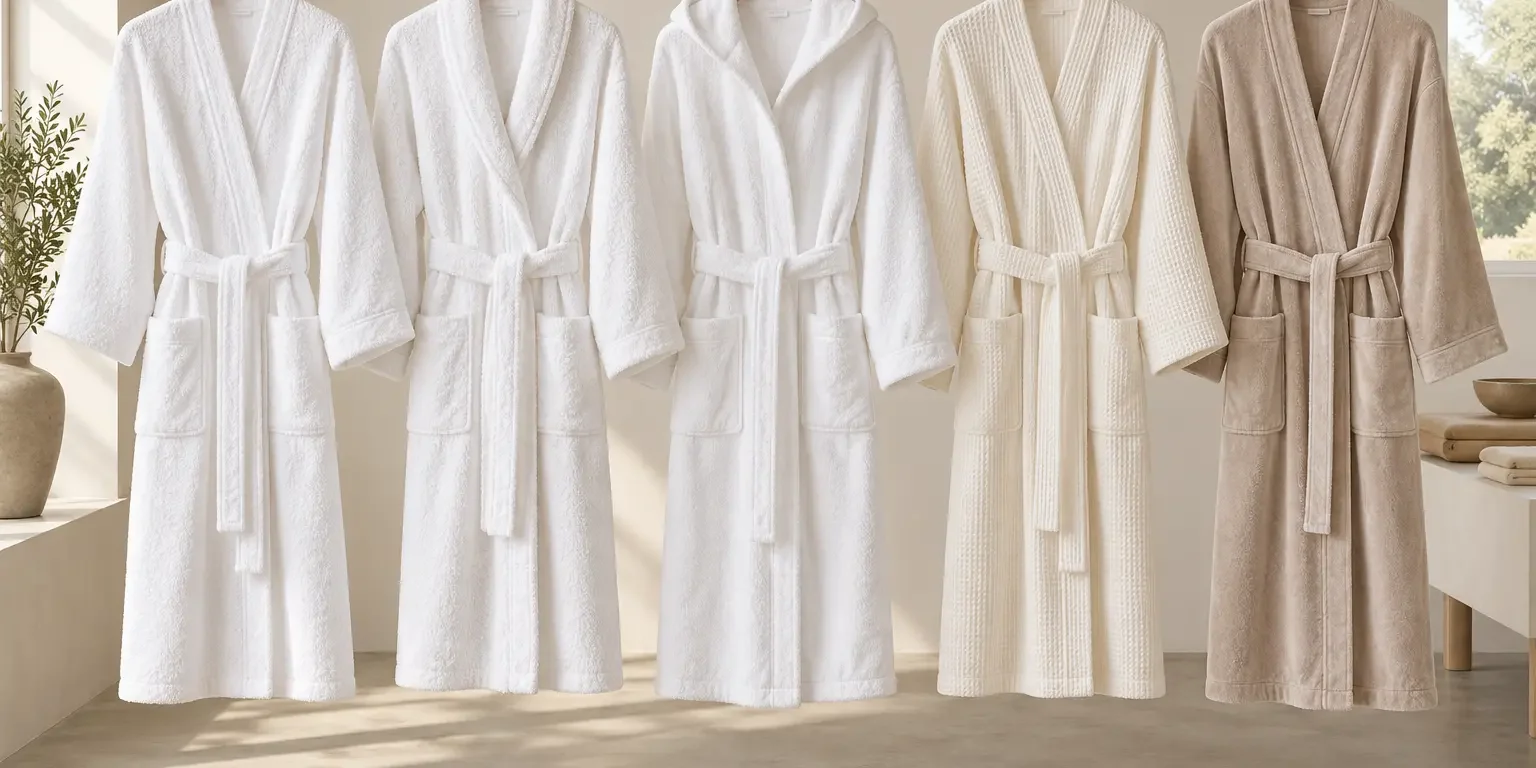
Describe where the robe will be used: guest bathroom, spa treatment area, pool access or retail shop. Decide whether the preferred presentation is plush terry, textured waffle, a smooth velour face or another construction. These descriptions define appearance; confirm composition and actual fabric weight separately.
A robe for a warm-weather resort may have different priorities from a robe for an indoor winter spa. Compare sample garments under the intended use and laundering conditions instead of assuming one fabric is suitable everywhere.
Separate fabric GSM from garment weight
GSM measures fabric mass per square metre. The finished robe’s weight also depends on size, length, sleeves, collar, pockets and belt. A longer garment can weigh more than a shorter garment made from heavier fabric. Ask the supplier to state fabric GSM and finished weight for the reference size, where available.
- Fibre composition and fabric construction.
- Fabric GSM and acceptable tolerance.
- Back length, chest width and sleeve measurements.
- Kimono, shawl collar or hooded design.
- Pockets, belt loops, belt length and labels.
Approve a measurement chart
Terms such as unisex and one size do not define fit. Measure the sample and state the intended size range. Check collar comfort, sleeve opening, overlap and belt position on the intended wearers. For a retail assortment, agree separate measurements and order quantities for each size.
Record which dimensions are checked before and after washing. This prevents a fit problem from being dismissed as a different interpretation of the size label.
Evaluate the washed garment
Run samples through the hotel or spa’s proposed wash and drying process. Compare shrinkage, seam appearance, belt twisting, surface feel and colour. Check the garment again on a wearer after care. Agree trial checkpoints and rejection criteria before authorising bulk production.
If embroidered, review the logo on the actual cloth. Inspect local stiffness, backing and placement after the garment is washed and folded. A digital artwork proof cannot establish the finished embroidery result.
Make quotations comparable
Ask for quantities by size and colour, packaging, labels, branding setup and the proposed sample process. Confirm which elements are included in the quoted price. Keep one approved garment and measurement chart as the repeat-order reference.
Develop your programme
Explore the Al Haseeb bathrobe collection and our muslin garment guide. For children’s programmes, use the separate kids bathrobe development guide. Send the intended use, fabric reference, size chart, quantities and destination to discuss sampling and quotation.
Request samples and a quotation
Contact Al Haseeb Textiles with your product specification, quantities and delivery destination to discuss samples and a quotation. Explore more textile buyer guides before finalising your order.